
SEO management.
What is SEO, how does it work and why should you have an SEO specialist? And why should you start working with us?
We continuously make sure your website brings in customers from Google and Seznam (the Czech search engine). You will see the results of our work in the numbers.
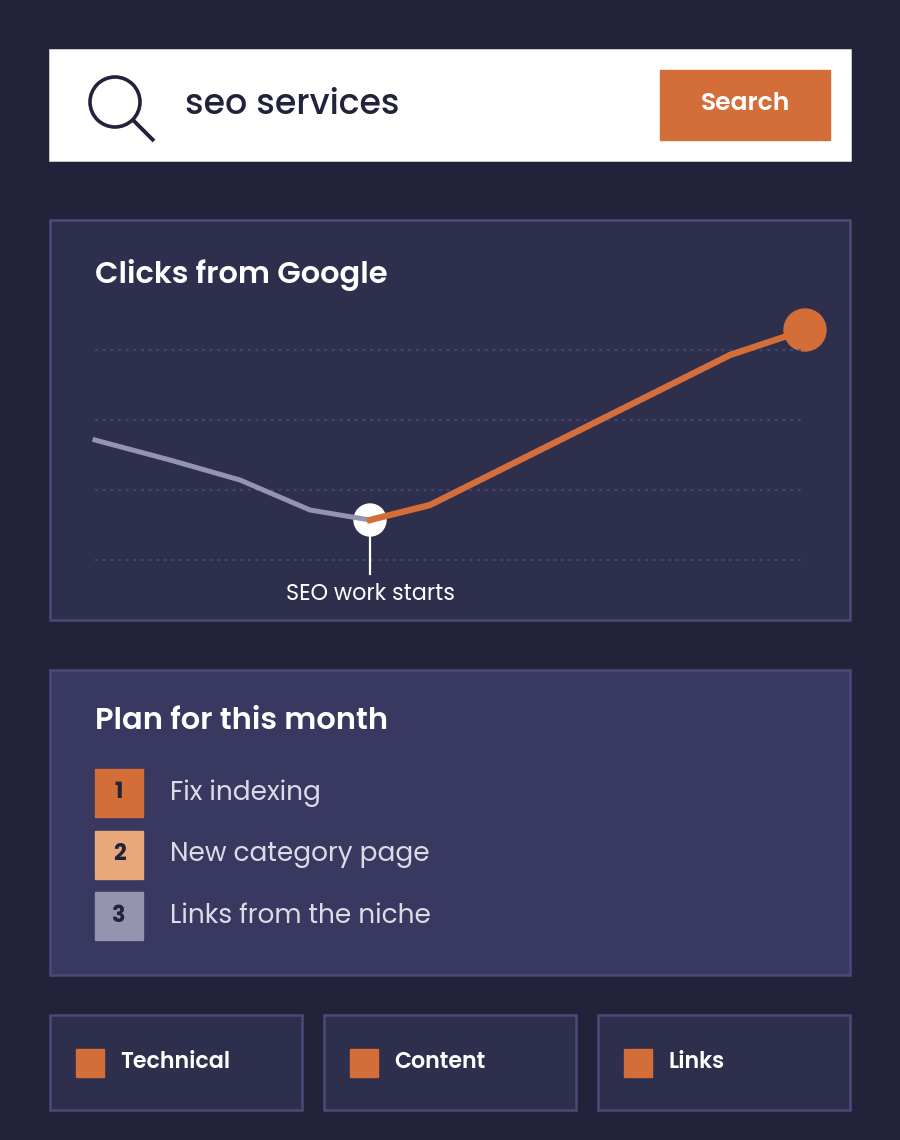
What is SEO and why do you want it?
Search engine optimisation, or SEO, is a key tool and technique for increasing revenue from search engines, which in our part of the world mainly means Google and Seznam (the Czech search engine). There are also offshoots, such as YouTube SEO, Pinterest SEO or local SEO working with Google My Business. Today, SEO naturally also focuses on optimisation for AI and LLM models such as ChatGPT or Perplexity. In this context, you may come across the term GEO (Generative Engine Optimization).
If I want to improve and work on SEO (or GEO), I want my website to be easier to find on the internet for relevant keywords (and more visible in AI models for relevant phrases and questions). Put simply, I want more people to visit it for competitive and interesting queries. The goal of these visits is most often sales, but in SEO we also definitely focus on informational queries that help the customer and raise awareness of the brand or online shop.
Search engines put together a ranking of relevant pages, and the job of an SEO specialist is to serve them your content as well structured and organised as possible. You want to have the best answers for relevant keywords. I want my website to rank as high as possible in organic search and so generate more organic traffic, which will then help me meet my business goals.
To put it more simply, SEO provides a steady flow of relevant users for FREE (well, almost). Developing SEO can also be seen as an investment, because the return is not immediate, but the benefits of the work are spread over months or even years.
IdeUp is a small agency run by Patrik Pilous. He manages SEO for clients personally, so he introduces himself here.
My name is Patrik Pilous and I have been doing SEO for more than 8 years. I have experience from marketing agencies, a startup and my own successful projects, where I brought in millions of users and many customers from organic search.

The basic types of SEO
In SEO management, we work on all four areas. The balance depends on where your website has the most room for improvement.
On-page SEO
These are factors you can set and influence on your own website. We mainly fine-tune page titles and internal links.
Off-page SEO
This is everything you cannot influence directly on your website, meaning external signals such as link building. It also includes brand mentions, which AI search engines read.
Technical SEO
Correct technical setup of the website, plus checks on indexing and website speed. We fix errors that stop Google from crawling the website first.
Content SEO
This mainly covers creating the architecture, structure and placement of content. The texts are written by copywriters from our network based on an SEO brief.
On-page SEO and off-page SEO
SEO is an umbrella term with many smaller and larger subdivisions that overlap in various ways. Here we introduce the two most basic ones. As the names suggest, on-page SEO is done on your own website, while off-page SEO is built on external sources.
To fine-tune on-page factors, you need to understand certain principles and then have at least an intermediate command of a tool such as Screaming Frog, Ahrefs or another alternative. Following the criteria and recommendations, you can then fine-tune the technical on-page factors of your website.
The next level is putting together the website architecture and creating suitable content. If you want your website to attract worthwhile traffic, a few landing pages are not enough. You need to start writing a blog or building content hubs. With SEO management, we do all of this for you.
How SEO management starts and runs
01
Access and data
We ask for access to Search Console and analytics. Without them we would be guessing. With them, we see real queries and orders.
02
Initial analysis
We review the website’s technical side and keywords, and we also look at the competition. This will not be a formal audit. We only note down what affects revenue.
03
Priority plan
We rank tasks by impact and effort. We then carry out the plan ourselves and only agree changes to the website code with your developer.
04
Work and measurement
The work runs month by month. We measure every change and set the next priorities based on the results.
Increasing profit from organic search results
SEO mainly focuses on increasing traffic to your website, but there are two key variables here: relevance and volume of visits. Some projects take a carpet-bombing approach and collect traffic regardless of quality or relevance. The opposite strategy is to optimise content for a narrow and extremely relevant group that you can simply call customers.
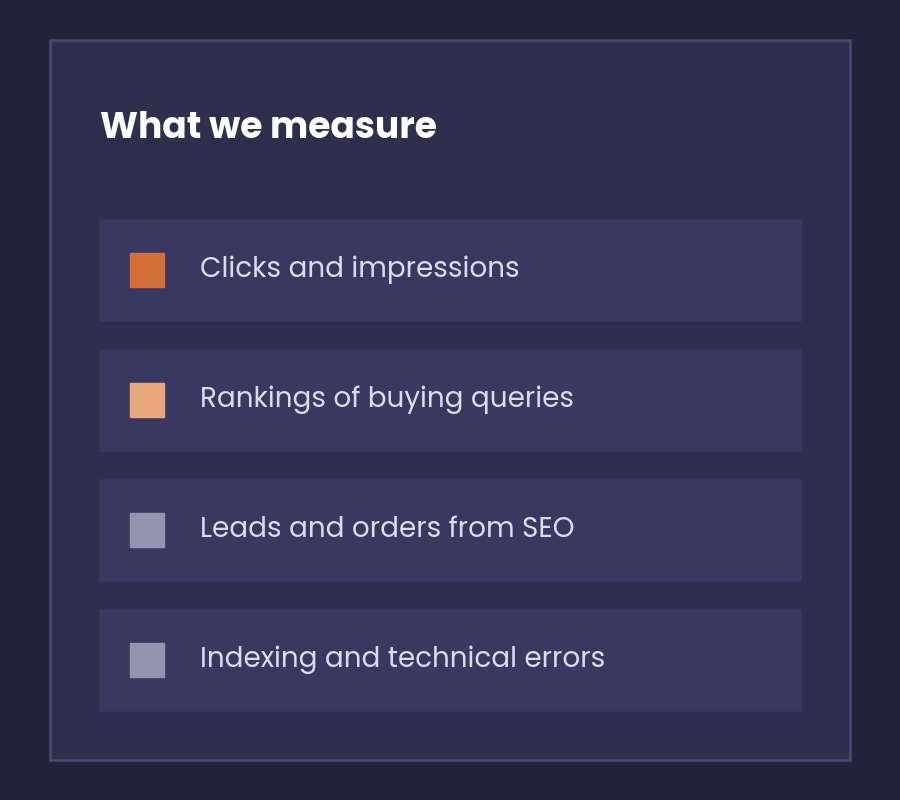
That is why we do not judge the results of SEO management by the number of visits. In Search Console we track clicks and queries, and in analytics we track enquiries and orders from search. We measure rankings mainly for queries that can lead to a deal. You then receive a regular overview of what we have done and what has changed in the numbers.
SEO services we also offer separately
In ongoing management, we combine them into one plan. But you can also order each one separately when you need to solve one specific thing.
A one-off review of your website and Search Console data. You leave with a plan of what to fix now and what can wait.
A map of the queries your customers search for. For each one, you know how many people search for it and which page should cover it.
Links from other websites and a check of internal linking. For competitive queries, it is hard to reach the first page without them.
Visibility in AI answers, from ChatGPT to AI Overviews in Google. We find out whether you are mentioned and, if not, why.
What clients say about working with us
Rated 5.0 out of 5 on Google. All reviews
★★★★★
“Our cooperation with IdeUp is long-term and always at a very professional level. I appreciate their proactive approach, clear communication and high-quality work. Everything ran without unnecessary delays. They are reliable, communicate quickly and understand what they are doing. I can recommend them as a reliable partner for online marketing.”
Michal Hardyn
Google review, translated from Czech
★★★★★
“Working with this marketing agency was very pleasant and professional. I appreciate their clear communication, quick feedback and fair approach. I recommend them to anyone looking for a reliable partner in online marketing.”
Tereza Gultová
Google review, translated from Czech
★★★★★
“Quality services, precise results, fast communication, pleasant manner. Definitely recommended”
Jan Barák
Google review, translated from Czech
Why SEO?
Even today, many projects build their website without considering SEO strategies and techniques at all. Simply everything wrong. The creators rely on social media, paid advertising and their brand, and hope for the best. Sometimes it works out, sometimes they end as quickly as they started.
For 95% of projects operating on the internet, SEO is suitable and important to a greater or lesser extent. It is also a very cheap source of traffic. SEO is very similar to investing in a brand. It is a long-term and very effective technique.
That is not enough. Every web project that wants to succeed should deal with SEO. SEO and a technically well-built website are essential foundations for further work on the project.
At the start, keyword research should be carried out, and the entire architecture and structure of the website should be designed based on it. This structure should reflect the business and also allow new sections to be added, moving the project forward. But SEO can also be started for projects that took off on social media and now want to become more stable online.
Ongoing management pays off mainly for websites that keep changing. An online shop adds products and categories, a company adds new services, and every change can break something in SEO. A small website where nothing changes for a year often only needs a one-off consultation.
SEO and website visibility
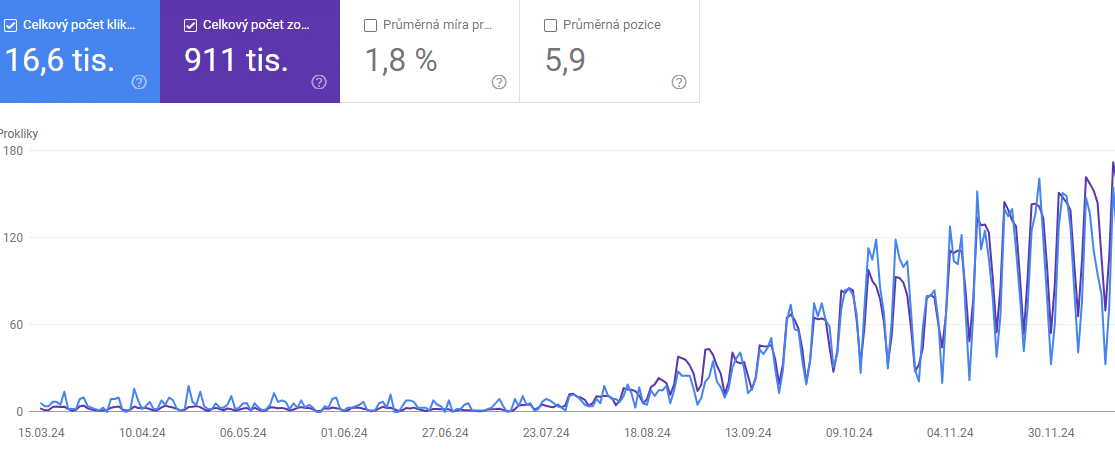
Optimisation for search engines, or SEO, is a key tool and technique for increasing revenue from full-text search engines, which in our part of the world are mainly Google and Seznam (the Czech search engine). Good optimisation brings you so-called free traffic, which means potential money. Website owners then face one more task: monetising their visitors.
How can you make money from websites? There are several options. The most proven include selling your own product or service, AdSense advertising and affiliate marketing.
When people say SEO, they mainly mean visibility in organic search. For more than 20 years, organic search has been the main traffic channel for most websites and projects.
For a web project, it is essential to compete for positions in search engines. The first to third positions on the page for a given keyword or term take the biggest slice of the traffic pie. From twentieth place onwards, it is usually only hundredths of the total number of searching users. SEO helps improve the quality of the website and the ranking criteria so that the page moves higher in the search engine.

Mobile SEO
Google now crawls and ranks a website based on its mobile version, as its documentation for webmasters (Google Search Central) also states. Anything missing or slow to load on mobile is also missing from the ranking. That is why, in SEO management, we check websites mainly in the mobile view.
- More on mobile. Some websites reach a tipping point where more people visit them on a mobile phone than on a computer.
- Responsive design. Responsive design is now the basics. What matters is fine-tuning the elements and details of the display.
- Accelerated Mobile Pages. Google introduced AMP in 2015, and today many websites take you from your mobile to an AMP version, which is simpler and faster. However, AMP is no longer a requirement for appearing in news results.
- Different behaviour. Users on mobile phones behave differently and, for example, read less of the text that is placed on web pages in large blocks.
Keyword research.
When creating a new website, it is essential to spend time on keyword research, which should reflect your business interests and analyse your competitors. Google search can serve as the basic building block for keyword research. For more specialised keyword research, you can then use Ahrefs, Screaming Frog or Collabim. The website architecture should be created or adjusted based on the results of the research.
In SEO management, we work with the research on an ongoing basis. We add new queries from Search Console and reflect it in the website structure, and new categories, service pages and articles are created based on it.
Create valuable content for your visitors
Added value or valuable content is the best natural search engine optimisation. If you create high-quality, long and useful articles for your readers, you will do well. And if you also add research into topics and keywords, the right headings, image optimisation, internal link building and hierarchy? Then you should be truly successful.
In some competitive industries, you also need to master more advanced techniques, and even that will not be enough for the first page of Google. SEO is a game where Google sets the rules. Those who best understand the rules and adapt their output to them are the ones who succeed.
Articles on optimisation and SEO
What did not fit on the service page, we cover on the blog. These four are useful before you make a decision.
Price ranges, billing models and when SEO does not pay off.
Questions for the first meeting and warning signs before signing.
What to check on your website first, before you start writing content.
Search engines, keywords, backlinks and AI Overviews in Google.
Before we start working together
Short answers to what people interested in SEO management want to know first.
What is SEO?
Search engine optimisation, or SEO, brings traffic from the Google and Seznam (the Czech search engine) search engines. SEO is important for the success of a web project.
How much does SEO management cost?
We confirm the price in advance based on the scope. It depends on the size of the website, how much content and how many backlinks are needed, and how much work your team can handle itself. We explain how SEO prices on the market are made up in our article How much does SEO cost.
How long does SEO take to show results?
Fixes to technical errors show up in the data first, as soon as Google crawls the fixed pages again. New content and backlinks need more time, and their benefit builds up over months.
Do you guarantee first place in search results?
No. Rankings are determined by Google, and nobody who does SEO can honestly guarantee them. What we can promise is work based on data and measurement that lets you see the results.
Show us your website
Tell us which website it is and what you expect from SEO. We will get back to you with a proposal on how to start, and we confirm the price in advance.