An editor receives dozens of press releases every day. They open a few and use a fraction. The rest they delete based on the subject line, without even opening them.
It is not that journalists are uninterested in companies. It is that the vast majority of releases contain no news, only an announcement that something has happened at the company.
This article explains when to write a press release, how to structure it so it stands a chance, and why it is also one of the few honest ways to earn links.
When to write a release at all
The first question is not how to write it, but whether to write it. A release without a reason damages your relationship with the journalist next time.
There are four situations in which it makes sense to get in touch.
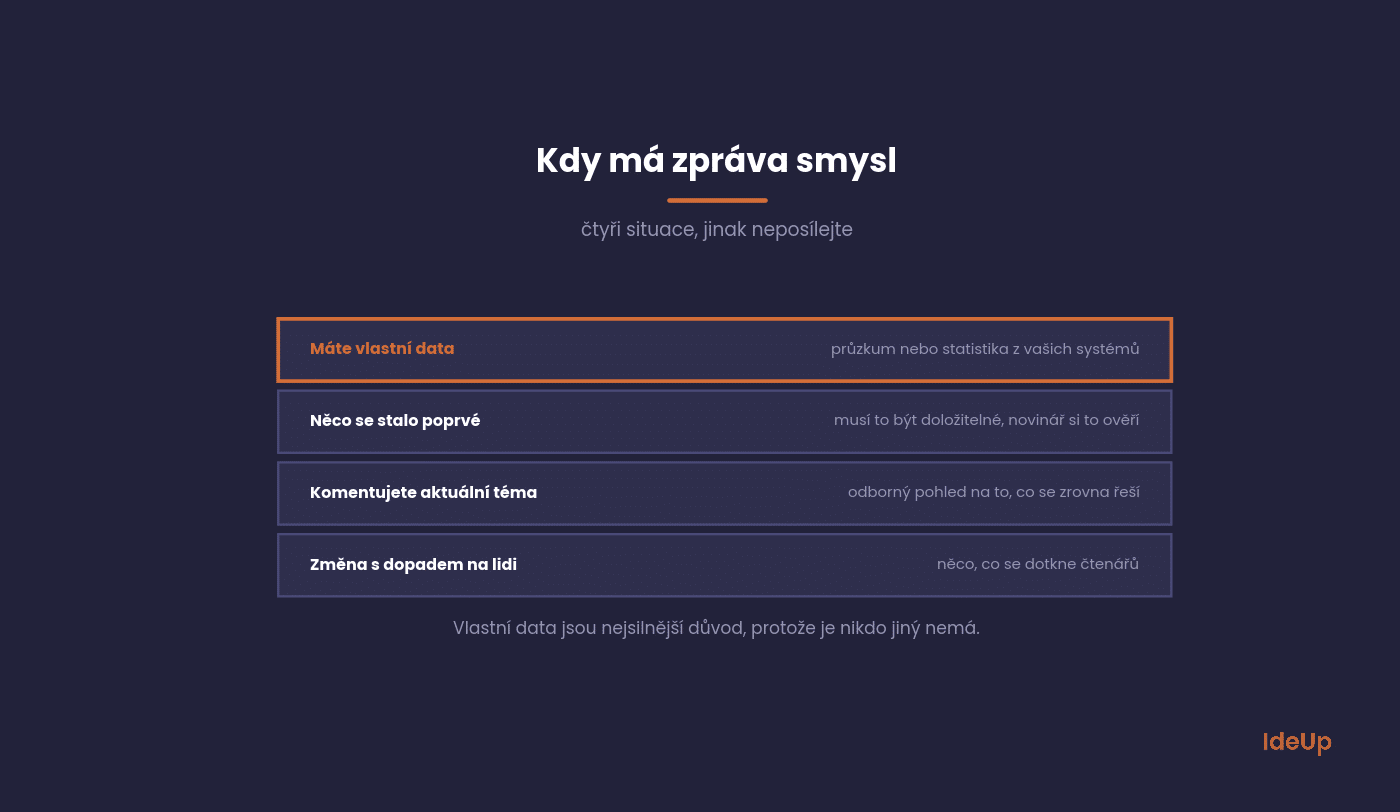
You have your own data. A survey, statistics from your systems, a market analysis. The strongest reason of all, because the data is not available anywhere else.
Something has happened for the first time. First in the country, the largest, the smallest. It must be verifiable, otherwise the journalist will check it and never reply to you again.
You can comment on a current topic. When the media is covering something from your field, an expert comment is valuable.
A major change that affects people. A branch closing, a large investment in the region, something that will affect readers.
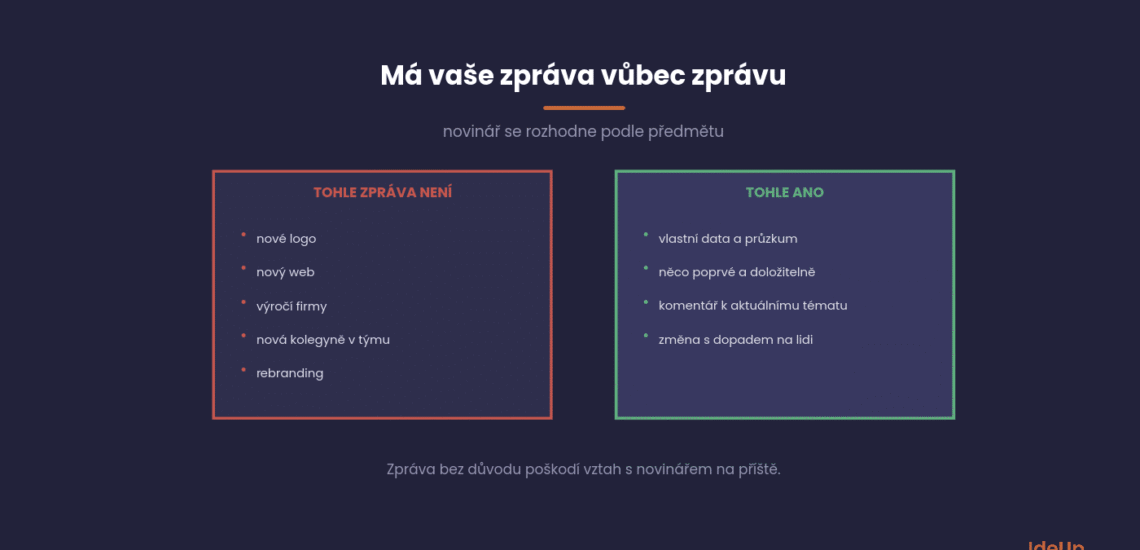
What is not news. A new logo, a new website, a company anniversary, a new colleague on the team. All of this belongs on your own channels, not in the media.
A product launch or a new business
A new product or a newly opened business is not news on its own. Companies launch things every week. What makes it news is what changes for the people who will read about it.
For a product, describe the problem it solves and who it is for, in plain terms. If it does something no other product on the market does, say what that is and how the journalist can check it. Give the price and availability, because readers want to know whether and where they can buy it.
For a new business, the opening is rarely the story. The reason the founders started it, a gap in the local market or the jobs it creates in a region usually are. At this stage, local and trade media are more likely to cover you than national outlets.
How to structure it
The structure is fixed and it does not pay to deviate from it. Journalists read quickly and look for whether there is anything there.
The inverted pyramid works, meaning the most important information goes at the top.
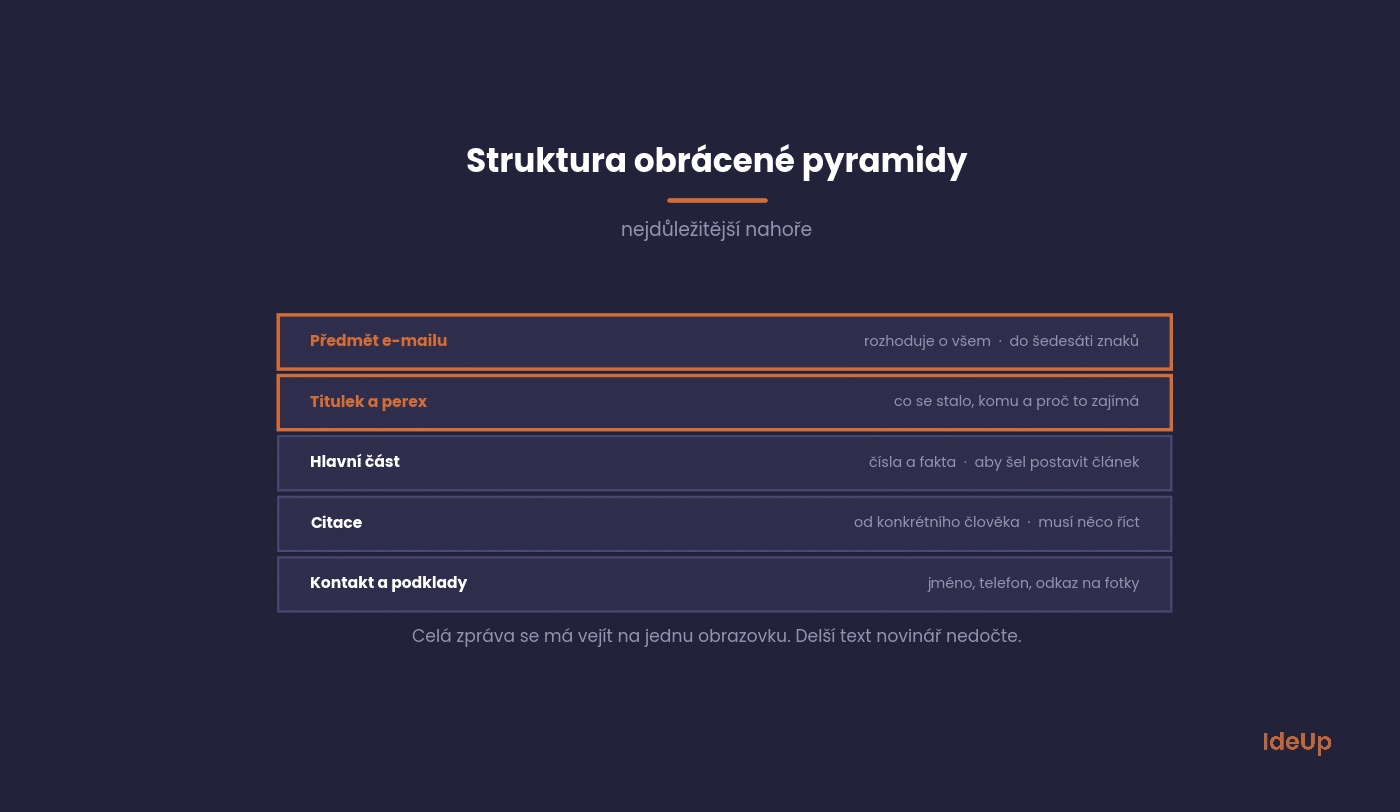
Email subject line. It decides everything. A specific message in roughly sixty characters, no superlatives.
Headline and lead. What happened, to whom and why anyone should care. It should fit into two sentences.
Main body. Numbers and facts. Ideally in a form that an article can be built from directly.
Quotes. One or two, from a specific person with a job title. They must say something, not thank the team.
Contact details and materials. Name, phone, email and a link to photos in decent resolution.
The whole release should fit on one screen. Journalists usually do not finish longer texts.
How to write a press release step by step
Once you know you have news, the writing goes faster if you follow a fixed order.
- Write the news in one sentence. If you cannot, you do not have a release yet.
- Collect the facts. Numbers, dates, names and places that support the news.
- Write the lead before the headline. The headline is easier once you know what the first two sentences say.
- Add the body in order of importance. An editor should be able to cut from the bottom without losing anything essential.
- Get the quote. Check that it adds an opinion or context the facts do not.
- Read it as a journalist. Remove every sentence that would not make it into an article.
- Test it on someone outside the project. If they cannot tell you what happened, rewrite the lead.
How to write a press release headline
A good headline states the news, not the topic. “Company X launches new service” is a topic. A headline that names the change, the number or the place tells the editor at a glance whether it is relevant to them. Use an active verb, the company name and the most specific detail you have.
A simple press release template
You can reuse the same skeleton for every release.
- Headline in one line, stating the news
- Date and place
- Lead of one or two sentences covering what, who, when, where and why
- Two or three paragraphs of facts and context
- A quote with the person’s name and job title
- A short paragraph about the company, the same in every release
- Contact details and a link to photos
A template keeps the format consistent. It does not replace the news itself.
Who to send it to
A mass mailing to two hundred addresses is the fastest route to the bin. Journalists notice and stop reading you.
A shorter list with personal outreach works better.
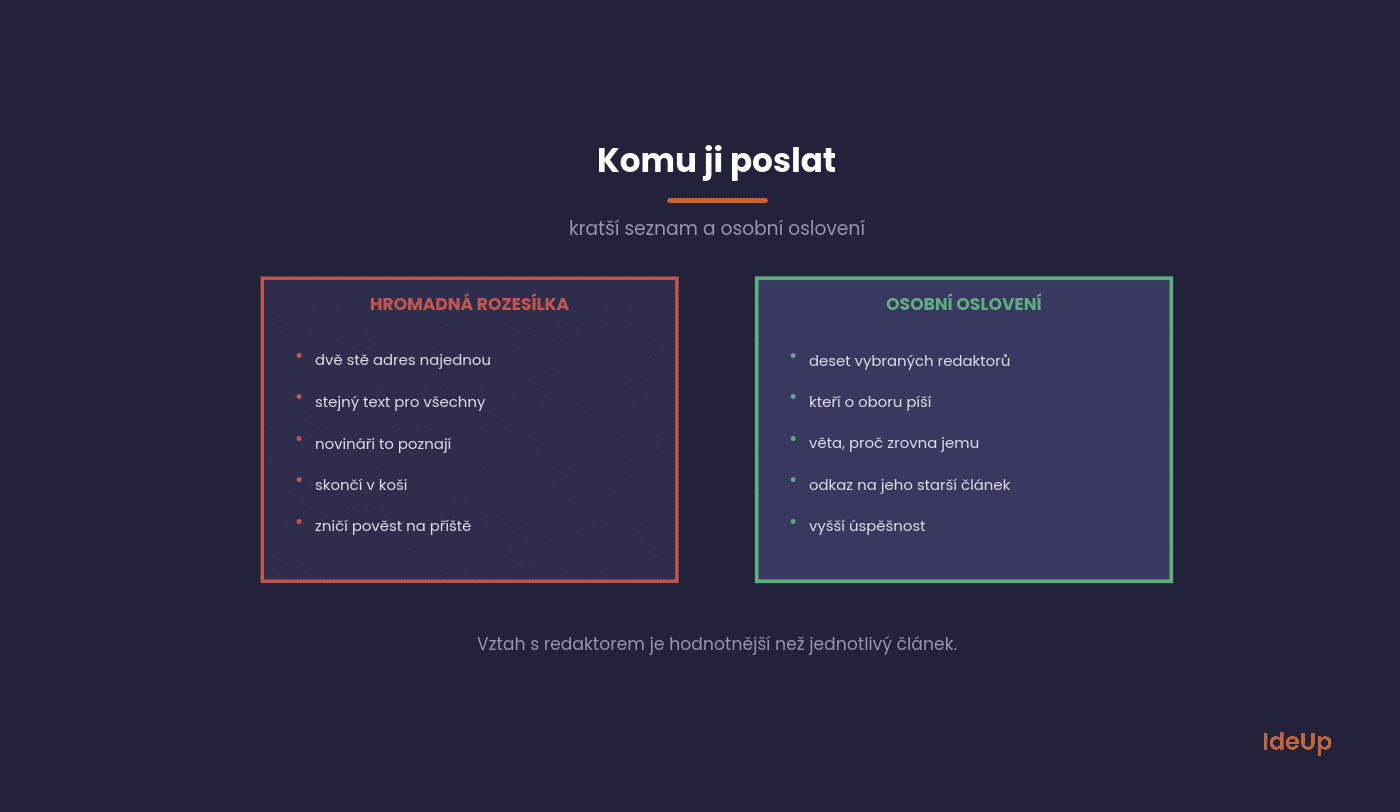
Choose editors who actually write about your field. You find this out by reading their articles, not from a contact database.
In the email, write one sentence about why you are sending it to them in particular. A link to one of their earlier articles on the topic works best.
A shorter, well-thought-out list also will not ruin your reputation for next time, which with journalists is the most valuable thing you have.
How to write a press release email
The email is the first thing the editor sees, so treat it as part of the release, not as packaging.
Paste the full text into the body of the message. Above it, write two or three sentences of your own. Say what the news is, why it fits what this editor covers and whether you can offer something extra, such as exclusive data or an interview.
Send each email to one person, never to a list with everyone visible in copy. Use your own name as the sender rather than a generic address, so the editor knows who to reply to. And do not use the words press release as the whole subject line, because they tell the editor nothing.
The press release as a source of links
This is why PR belongs in an SEO plan. A link from an editorial article is exactly the type that cannot be bought.
It is also an honest method, because the link comes about because you gave the media outlet a reason to write about you.
Be careful with expectations, though. Many media outlets do not include links in articles at all, or they add an attribute that does not pass on ranking value. Even so, the mention is valuable because it strengthens the brand.
Media mentions are also read by language models, which people now get answers from. We cover this under GEO.
We describe how it fits into a broader plan in our article on link building. Digital PR is one of the zero-risk methods there.
Patrik Pilous discusses the relationship between PR and marketing in general in his article on public relations.
A practical tip. If the release contains your own data, put it on a page on your website and link to it in the email. Journalists will then naturally link to the source.
What to do after sending
Most companies send and wait. Yet there are a few things you can do to increase the success rate.
None of them involves pestering.
Be available. If a journalist calls and nobody picks up, they will write the article without you.
One polite follow-up after two to three days is fine. A second one is not.
Track where the release appeared and say thank you. A relationship with an editor is more valuable than a single article.
And keep a record of who wrote about you. In a year, you will have a list of people worth sending your next release to.
What to avoid
These are the things we see most often in Czech press releases.
All of them reduce the chance of being used.
Superlatives without evidence. Revolutionary, unique, the best. The journalist crosses them out and loses trust in the rest.
A quote that says nothing. Nobody will print sentences about how much the company values its customers.
Email attachments. The text belongs directly in the body of the message. Photos as a link, not as ten megabytes in an attachment.
Marketing language. The release should be written like an article, not like an advert.
Common questions about PR
The five questions we get most often from smaller companies.
The answers apply generally.
How often should we send releases
Only when you have something to say. For a smaller company, this realistically means two to four times a year.
A regular schedule leads to inventing reasons, and that is the beginning of the end.
Are paid distribution services worth it
For reach, yes. For quality links, usually not. Distribution to dozens of portals ends up in sections nobody reads.
Ten personally contacted editors get better results than mass distribution.
Do we need an agency for this
It mainly helps with contacts and wording. But the reason to write about you has to come from within the company.
An agency that invents reasons will harm you in the long run.
What if nobody publishes us
Ask yourself whether there was any news in it. Nine times out of ten, the answer is no.
The second common cause is a poor choice of recipients, meaning people who do not write about the field.
Does PR also help with better rankings
Indirectly, yes, through links and brand mentions. It has no direct effect.
A stronger brand shows up in search, as we describe under brand building.
Where to start at your company
Check whether your systems hold data that nobody else has. Orders, seasonality, customer behaviour. That is the fastest route to a topic someone will write about.
Then find five editors who have written about your field in the past six months. This list will last you for years.
Copywriting can help with the text of the release itself. The difference between a release a journalist uses and one they delete usually lies in the subject line and the first two sentences.
Want to connect PR with link building so it also brings links? We specialise in link building, get in touch via our contact page.
Frequently asked questions about how to write a press release
How do you write an effective press release?
Start with real news and state it in the first sentence. Back it with facts the journalist can check and keep the text short enough to read in a minute. Effectiveness depends as much on choosing the right recipients as on the wording.
How do you write a good press release for a product?
Focus on what the product changes for the user, not on its features. State the price, availability and any verifiable first or unique property. Offer samples or good photos, because editors covering products often need them.
How do you write a press release for a new business?
Find the angle behind the opening, such as a local need you meet, jobs you create or an unusual founding story. Send it to local and trade media first. Keep the company description brief and factual.
Is a press release template enough?
A template helps you keep the right order and not forget contact details or the company paragraph. It cannot make a weak topic interesting. Use it for the format and spend most of your time on the news and the lead.